
Flight Mode (Nolimit City): Triggers, Modifiers and Bankroll Control for a High-Risk Slot
Flight Mode is a Nolimit City video slot released in June 2025 and designed around aggressive cascades, growing multipliers and several “danger-style” modifiers that can dramatically change the outcome of a spin. The game is widely classified as extremely volatile, with the highest commonly listed RTP configuration around 96.07% and a maximum win frequently stated as 5,051x the stake. This combination makes it a title that can feel quiet for long stretches and then suddenly deliver a major payout when modifiers stack correctly.
Core game setup and why volatility matters here
Flight Mode uses a 6-reel grid and a 729-ways-to-win system. Instead of fixed paylines, wins are formed when matching symbols connect from the leftmost reel to the right across adjacent reels. This format naturally increases the number of possible win routes, but it does not guarantee frequent profits because symbol distribution and hit rate still depend on the game’s internal mathematics.
The game is built around cascading wins (also called tumbling wins). When a win lands, the winning symbols disappear and are replaced by new ones dropping into place. This is important because a single paid spin can produce multiple consecutive outcomes. In high-volatility slots, cascades often act like a “delivery system” for rare high-value events, making the game’s behaviour unpredictable in short sessions.
One crucial technical detail is that Flight Mode is distributed with multiple RTP settings. The widely referenced “headline” value is about 96.07%, but lower configurations may exist depending on the casino’s chosen version. If you want to make decisions based on expected value rather than luck, checking the RTP figure in the game’s information panel is one of the few player actions that genuinely matters.
Practical “before you spin” checks that reduce avoidable risk
First, verify which RTP configuration you are playing. Two casinos can offer the same slot, but the long-term cost of play can differ if one operator uses a lower RTP version. That difference becomes especially relevant in a game where meaningful wins may be infrequent and heavily concentrated in bonus mechanics.
Second, choose your stake in a way that respects the slot’s volatility profile. A max win of around 5,051x sounds enormous, but it also indicates that a large portion of the payout potential is reserved for rare outcomes. If your stake is too high relative to your session budget, you risk burning through your bankroll long before you experience the high-multiplier sequences that define the game’s best results.
Third, decide in advance whether you will use bonus purchase options if they are available. Buying a feature may reduce waiting time for a trigger, but it also increases the financial impact of each attempt. In practical terms, it compresses volatility: you experience the most expensive parts of the game faster, which can be useful for testing but risky for casual play.
Triggers: what starts the main features and how to plan for them
The main feature typically referenced in Flight Mode coverage is the free spins bonus, which is usually triggered by landing three or more Scatter symbols. While the exact behaviour of how scatters behave during cascades can vary by design, the general rule in this genre is that the bonus trigger is a comparatively rare event that players should treat as a “session highlight” rather than something expected every few minutes.
Beyond free spins, reviews frequently describe additional mechanics such as Bomb-related effects and the so-called xHole mechanic. These are presented as modifiers that can alter the grid, remove symbols, expand cascade potential or interact with multiplier growth. From a player-planning perspective, these are not “minor extras” — they are often the reason a session suddenly shifts from low returns into an explosive sequence.
Nolimit City games are known for stacking mechanics, meaning the biggest outcomes usually happen when multiple features interact in the same run. Flight Mode fits that pattern. It is rarely one symbol or one win that matters most — it is the build-up where multipliers rise, cascades extend and modifiers reshape the field to allow higher-value connections.
How to think about triggers in session planning (not superstition)
Do not chase a bonus trigger by increasing stakes after a losing streak. High-volatility slots naturally include cold periods, and raising the bet is more likely to accelerate losses than to “force” a bonus. A better approach is to pick a stake that fits your budget and keep it consistent.
Use predefined checkpoints. For example, split a session into blocks (such as 100 spins per block) and decide what you will do if you reach a specific loss level. This does not change the game’s odds, but it protects you from emotional decisions, which is one of the main reasons players overspend on volatile titles.
If you use feature buys, limit the number of attempts per session. Each purchase should be treated as a separate high-risk event with outcomes that may be well below cost. The buy feature can reduce waiting time, but it does not remove variance — it concentrates it.
Modifiers and multipliers: where the real upside (and danger) comes from
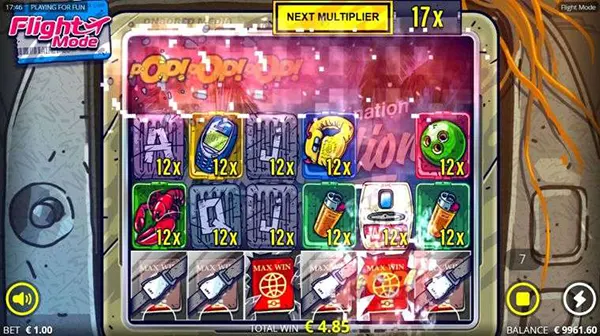
Flight Mode is heavily driven by multiplier growth during cascading sequences. As tumbles continue, the multiplier can increase and then apply to subsequent wins. This is the reason some spins feel like nothing is happening until, within a short chain of cascades, the game suddenly produces a result far above the base game average.
Modifiers like Bomb mechanics and xHole-style interactions are commonly described as ways to reshape the grid and extend cascade potential. When these appear during the right sequence, they can create additional symbol drops and keep the chain running long enough for multipliers to become meaningful. This is why many players experience Flight Mode as “hit-or-miss”: the value is not evenly distributed — it clusters in stacked events.
Because so much of the slot’s return potential is concentrated in high-multiplier sequences, judging the game over a very short sample is misleading. A few dozen spins can look terrible even if the slot is behaving normally, because the design encourages rare spikes rather than steady payouts.
Bankroll management that fits Flight Mode’s maths
Think in spin units rather than money feelings. Volatile slots often require a larger buffer if you want the session to feel stable. Many experienced players prefer several hundred spins as a minimum runway at a chosen stake, simply because the most valuable mechanics may not appear quickly.
Set a stop-loss and a stop-win and treat both as fixed rules. A stop-loss protects you from long cold periods. A stop-win protects you from giving back a rare big hit while chasing an even rarer one. In games like Flight Mode, protecting a strong win is often the most rational decision you can make.
Track your sessions over time. If you record how often you see free spins triggers or significant modifier sequences, you build a realistic sense of the game’s rhythm. That helps you avoid the common psychological trap of believing a bonus is “due” after a dry streak — a belief that leads to overspending and poor risk control.