
Guitar Quest: How a Musical Journey Became Modern Slot Mechanics
Released by Relax Gaming on 28 May 2026, Guitar Quest turns the atmosphere of a rock concert into a complete video-slot concept. Music is not merely decoration: stage effects, changing pace and two contrasting bonus modes shape the way the game presents each spin.
A Rock Concert Built into the Reels
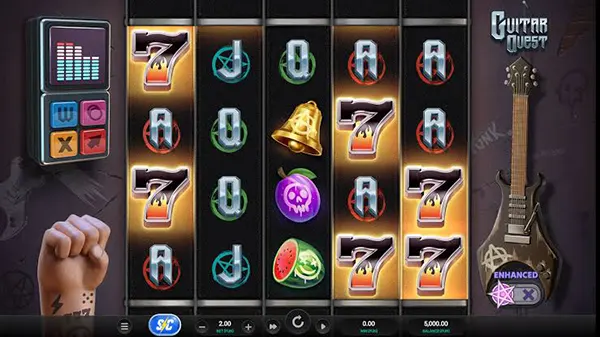
Guitar Quest uses five reels, four rows and 1,024 ways to win. Its standard version has a theoretical RTP of 96.10%, a maximum win of 10,000 times the stake and bets ranging from €0.10 to €100 per spin.
The design mixes familiar fruit-machine symbols with amplifiers, bright stage lighting and animated concert effects. The soundtrack also grows more intense when modifiers appear, helping the theme influence the rhythm of play rather than sitting behind it.
The way Guitar Quest connects its theme with practical features reflects a broader trend in modern slot design. Readers who want to place this approach in a wider context can consult the general slot guides on NolimitWay, which cover game themes, symbols and common mechanics. Guitar Quest develops the idea further by making music an active part of the visual presentation, pace and bonus structure.
Four Equaliser Effects Shape the Base Game
The base game can trigger four Equaliser effects. Random Wilds add substitute symbols, while Symbol Split duplicates selected symbols and may create more matching positions across the reels.
A multiplier can increase a completed win, and Low Symbol Removal clears weaker symbols from the current spin. Each effect is easy to recognise, but several may combine in the same round and produce a more active result.
The Equaliser acts much like a sound-control panel, with each setting raising the intensity in a different way. This gives ordinary spins a sense of movement without forcing players to learn a complicated set of rules.
Backstage and Solo Modes Change the Rhythm
Landing three or more Bonus symbols opens a choice between two features. Backstage Mode follows a free-spins format in which Equaliser effects develop and remain active, so later spins may contain more modifiers than the opening rounds.
Solo Mode changes the screen into a guitar-fretboard layout. Values move down the board while a travelling collector gathers them, and the increasing speed gives the sequence the feel of a rhythm game rather than standard spinning reels.
The two modes create different types of tension. Backstage builds gradually through repeated spins, while Solo Mode is faster and visually busier, although both remain games of chance and do not reward musical skill or quick reactions.
What Players Should Check Before Playing
Guitar Quest is a high-volatility title, so notable wins may be less frequent and results can vary sharply between sessions. The 10,000x maximum is a theoretical limit, not a likely return, making fixed stakes and a clear spending limit important.
Some casinos may offer alternative RTP versions, so players should check the figure displayed in the game information panel. Enhanced bets and direct feature purchases may also be restricted or unavailable under local gambling rules.
Guitar Quest shows how a modern slot can turn a theme into a working system. Its strongest idea is not simply the rock setting, but the way sound, visuals, modifiers and bonus progression work together to create the sense of a performance moving towards a finale.