
Wanted Dead or a Wild by Hacksaw Gaming: bonus modes explained
Wanted Dead or a Wild is a high-volatility 5-reel, 5-row slot built around feature-driven swings rather than steady base-game returns. The grid uses 15 fixed paylines and the game’s identity comes from DuelReels: “VS” symbols can expand and, when they connect to a win, convert into full wild reels with reel multipliers. Another practical point for 2026 is that the same title may run on different RTP configurations depending on the casino, so checking the in-game information panel matters if you want the numbers to match your expectations.
Core maths and what makes the bonuses swingy
The official profile of the game is straightforward: this is a high-variance slot, meaning results can cluster into long quiet stretches broken by occasional sharp spikes. In that kind of maths, most sessions will not “look average” in real time. Instead, the game tends to deliver a lot of its value through feature interactions—especially when multiplier mechanics land in a position that actually connects to paylines.
RTP is not a single universal number here. Wanted Dead or a Wild has multiple RTP settings that operators can choose from, and the experience changes materially between the highest and lowest configurations. Two players can play “the same game” with identical rules and visuals, yet face different long-run expected returns purely because their casino runs a different RTP version. For responsible play, it’s sensible to treat the RTP panel as part of your pre-session check, not trivia.
The key driver of volatility is that DuelReels outcomes are conditional. A “VS” symbol can appear, expand, and still be worth little or nothing if it doesn’t become part of a winning line after expansion. When it does connect, the reel becomes wild and applies a multiplier to that reel’s contribution, which can turn an ordinary symbol hit into a meaningful payout. The difference between a “nice moment” and a “big hit” is usually whether multipliers and line connections happen simultaneously.
DuelReels: how VS multipliers translate into money
DuelReels is easiest to understand if you separate it into two questions: does the VS expansion help you form a payline win, and if yes, how large is the multiplier attached to the wild reel? The first question is about positioning and symbol layout; the second is about scaling. If the expanded reel doesn’t participate in a winning line, the feature doesn’t get to do its job, which is why some spins feel like “nothing happened” even when the screen animates.
When multiple expanded wild reels contribute to the same winning line, the impact can compound. More than one multiplier can be involved in a single payout, and that interaction is the reason this title can jump from modest returns to very large returns in a single resolved win. In practical terms, the bonus features are not the only places where huge swings can happen—DuelReels can create them during regular spins too.
From a player’s point of view, the sensible takeaway is bankroll discipline. Because the game’s largest events depend on rare alignments (expansion + connection + multiplier stacking), chasing those events with stakes that your budget cannot sustain is the fastest route to loss chasing. If you want to play this title responsibly, set a stake you can hold through quiet patches and treat the feature spikes as occasional, not guaranteed.
The Great Train Robbery: sticky wilds and why screen coverage matters
The Great Train Robbery bonus is built around sticky wilds. Wilds that land can remain in place and keep contributing to wins across subsequent spins, which means the bonus can “build” over time. The more sticky wilds you accumulate, the more lines can connect, and the more often the grid can pay without needing a fresh setup every spin.
What makes this feature feel different from DuelReels-heavy moments is transparency. You can see progress on the screen: every sticky wild is a permanent improvement for the remaining spins. The downside is timing. If sticky wilds arrive late, you might not have enough spins left to exploit the improved coverage, so two bonuses with the same total number of sticky wilds can end with very different outcomes.
In jurisdictions where feature purchases are permitted, Train Robbery is often positioned as the “lower-cost” buy compared with the more aggressive bonus options. Still, buy availability and pricing are controlled by the operator and local rules, so you should treat the in-game buy screen as the only reliable source for the exact cost in your session.
How to read Train Robbery while it is happening
The first few spins usually tell you whether the bonus is building momentum. Early sticky wilds increase both hit frequency and the chance of multi-line overlap, because wilds substitute on every line they touch. When you see clusters forming early, the bonus has more time to convert that structure into repeated payouts.
Late sticky wilds are not useless, but the maths becomes tighter. With fewer spins remaining, the bonus has fewer opportunities to “cycle” the improved grid into multiple winning outcomes. That’s why players sometimes remember the feature as either “relentless” (when it builds early) or “flat” (when it doesn’t), even though the rules are identical.
Responsibly, this is one of the easier bonus types to evaluate mid-run. You do not need to guess hidden conditions: you simply watch how much of the grid becomes wild and how soon it happens. If coverage stays low deep into the bonus, it’s rational to expect a smaller outcome and avoid emotional decisions like raising stakes to “make it back.”
Duel at Dawn and Dead Man’s Hand: the two bonuses designed for spikes
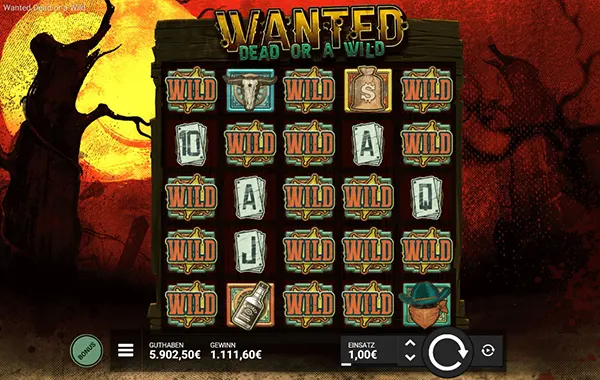
Duel at Dawn is the bonus most clearly aligned with sudden, high-impact outcomes. Its design aims to increase the chance of multiple “VS” symbols landing, which can create expanded DuelReels across several reels. If expansions connect to paylines and multipliers align, the bonus can produce the kind of result that defines the game’s reputation. If they don’t connect, it can also finish quickly with underwhelming returns—this is the nature of high volatility.
Dead Man’s Hand works differently: it is typically described as a two-stage structure. The first stage focuses on collecting elements (notably wilds and a multiplier), and the second stage (“Showdown”) applies those collected conditions repeatedly. In other words, it can feel like you’re assembling a toolkit first, then using it. When the first stage is strong, the Showdown has clear leverage; when it’s weak, the bonus can feel underpowered.
In 2026, the practical point for both bonuses is the same: they concentrate win potential into fewer, more decisive events. That concentration is why buy options—where legally available—tend to price these features higher than simpler modes. But whether you buy or trigger naturally, the core risk profile doesn’t change: results can swing hard because the game is built to reward rare alignments rather than frequent small wins.
Choosing between Duel at Dawn and Dead Man’s Hand in real play
If you prefer “explosive” outcomes driven by multiplier reels, Duel at Dawn is the more direct fit. It is tuned toward multiple VS events and expanded reels, so it can deliver a big moment quickly when the screen connects correctly. The flip side is that it can also fizzle when expansions don’t translate into meaningful line wins.
If you prefer a bonus that builds conditions and then applies them, Dead Man’s Hand tends to feel more structured. The best runs usually come from a strong collection phase, because wild coverage and a meaningful multiplier give the Showdown phase something to work with on every spin. When that setup isn’t achieved, the Showdown may not have enough power to lift the outcome.
Whichever bonus you enjoy more, it’s worth anchoring your expectations in what the game is: a high-variance slot where operator RTP settings can differ and where the largest outcomes are tied to feature interactions rather than steady base hits. If you want a calmer experience, this title is rarely the right choice; if you accept variance and manage your stake carefully, the mechanics are at least clear about where the big swings come from.